The French Kat Atelier: How Kenia Carreon Became Brentwood's Sewing Lady
Interview by Heather Anderson
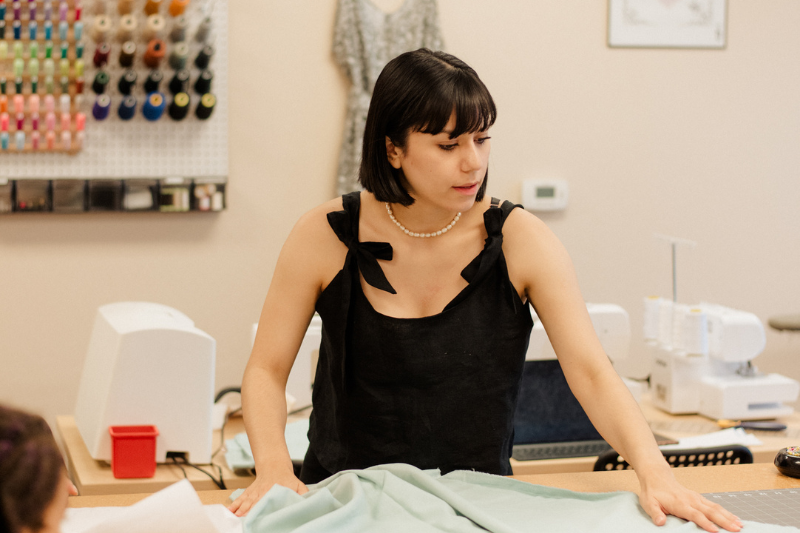
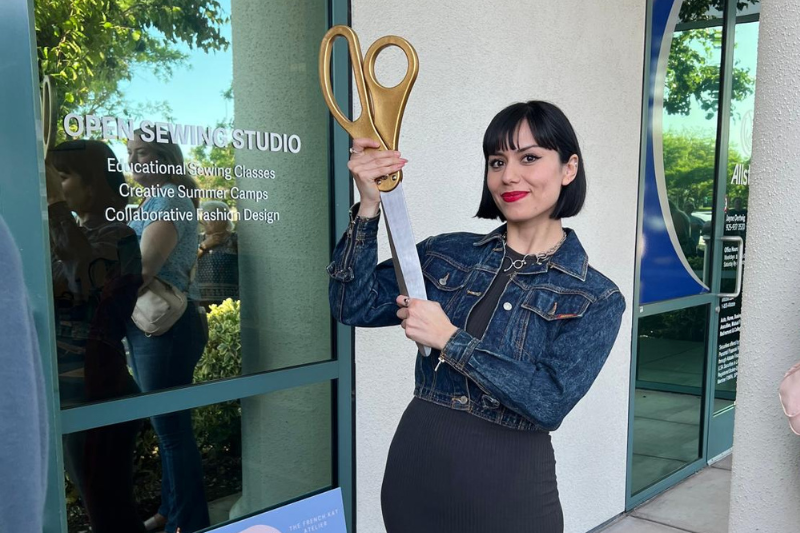
Kenia Carreon, known to just about everyone as Kat, graduated with honors in Fashion and Apparel Design from FIDM and worked in costume shops, bridal alterations, and a San Jose boutique before landing somewhere she never planned to be: in front of a classroom. In 2024 she opened The French Kat Atelier in Brentwood, an open work studio where kids, homeschool families, adults, brides, and a growing number of men learn to sew, mend, alter, and design. If you live in the far East Bay and have a pair of pants in the closet that's two inches too long, keep reading.
You moved to a town you'd never heard of, and within a year people were pointing at you in the grocery store saying "that's the sewing lady." What did that feel like?
I remember the exact moment. I'd been going to the Brentwood farmers market for a while before I even moved out here, so I already knew the vendors and the feel of the place. Once my Instagram went live in Brentwood, people started messaging me, and I went to introduce myself in person to the woman behind a city program called Better in Brentwood. We had DM'd maybe twice. I walked up, I hadn't even said my name yet, and she goes, "Oh my God, are you The French Kat? The sewing lady?" I'd had this very specific black bob for years, so she knew me on sight.
I just flushed. I get really warm when I'm received that way. I could not stop smiling. That was the first time I felt like this town was going to be kind to me.
Your path went from FIDM to costume shops to boutiques to bridal alterations, and somewhere in there, teaching snuck up on you. How did that happen?
Totally by accident. I loved costumes and thought I'd be doing that for the rest of my life, but COVID closed the company I was working for. I actually considered going back to the dental world, which is what I did before college. It was secure, and I knew I wasn't going to love it. So I tried bridal alterations instead. It was the most stressful job I've ever had, and I'm grateful for it, because it taught me that what I actually love is talking to people. Connecting with a bride and her family about what excites them.
After that came a boutique in Santana Row, where the customers were great and the coworkers took the fun out of it. So one day I was online typing, what the heck can I do with my degree? And I found a sewing studio fifteen minutes from my house that had been there twelve years and I'd never heard of. I messaged the owner: I've never taught before, but could you use me for anything? She said, come in, let's talk, and offered me a summer with the kids. It was a match. It was so magical I probably would have stayed forever if I hadn't moved.
Leaving the South Bay for Brentwood, then opening a studio there, is a big leap. What made you decide to actually go for it?
My partner, honestly. He's lived in other cities, he's run a business, and when he said, what about leaving San Jose and opening a studio out here, something sparked. But I almost didn't. For how out there I am with my style, I get very attached to a place. I went to FIDM in San Francisco and still didn't move to the city, and it's a forty minute drive. My culture, my family, my whole comfort zone were in the South Bay.
What tipped it was knowing I wouldn't be doing it alone. A fresh start with a new business, a new partner, and a new city just sounded like fun. He also reassured me that if it failed, it wouldn't be the end of the world. I could try again. That was enough for me to say, I think I'm going to try it.
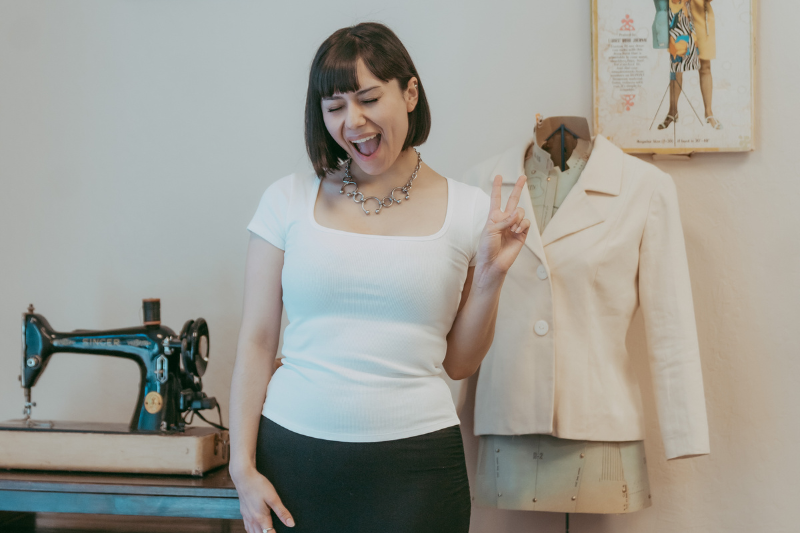
Where does "The French Kat" come from? Is there a France in your story, or a cat?
Both, kind of. My last name, Carreon, has French origins, though I couldn't tell you what percentage French I actually am. And so much sewing language is French. Appliqué, the French curve, the French seam. I knew I wanted that word in there. I went through so many weird names trying to find one that sounded fun and original without sounding posh.
Kat is a nickname I've had my whole life. When I was a baby I would meow for attention, so my mom called me Kitty. By middle school, Kitty had turned into Kat. Everyone calls me Kat. Most people don't know my legal name until they see my business card and go, who's Kenia?
Atelier just means studio in French, and when I first opened, this was going to be a design studio, not a classroom. So the full name is a mouthful, and people always ask how to say it. You can just call it The French Kat. The atelier is a bonus.
“If it fits under the presser foot and the needle can pierce it, I’ll try. I really like saying yes to see what my abilities are, because skill only grows.”
Your studio is an atelier and an open work space, not just a classroom. What does that mean for someone who walks in the door?
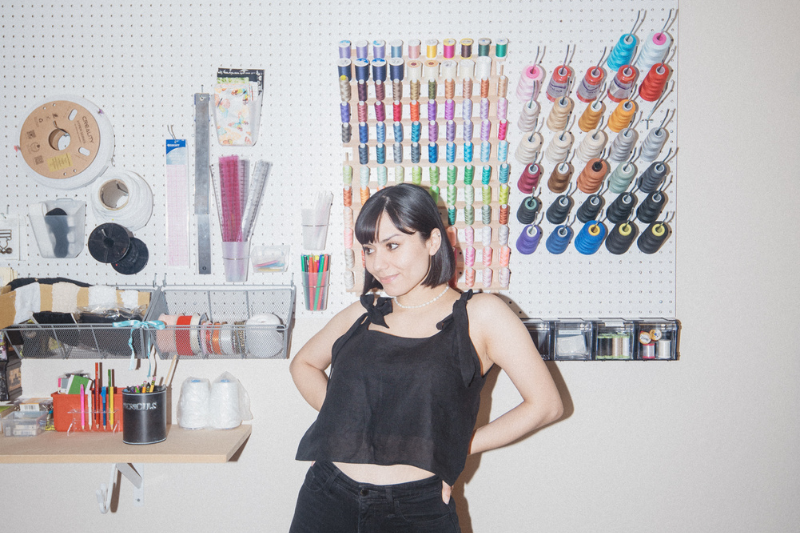
It means nothing is hidden. When I opened, I wanted a third place for people who already sewed. Somewhere you could come when you're stuck, ask questions, and use the tools without buying them. Because when you start sewing, the first thing people think about is the cost. A machine, supplies, fabric, thread, notions, gadgets, all to make one piece. I wanted to take that hesitation off the table.
So everything is out in the open. There's the iron, there are the rulers, the machines are out, and there's a big cutting table in the middle. If you walk in a circle you can grab everything you need and go back to your machine. I'll also tell you honestly whether you need a gadget. If you're into one style of sewing, you can get away with the basics. What surprised me is that more people wanted to learn than I expected, so I added beginner courses. A lot of students who finish one come back with an open studio membership to work on their own projects while I'm here if they get stuck.
What's the biggest misconception people have about learning to sew?
I hear three things: I'm not creative enough, I'm not patient enough, and I'm scared. I treat it like anything else you're learning for the first time. What I didn't want was the one day, five hour class where you cram in as much as you can, take no notes, and never touch it again. That's too much information at once.
So we walk through those fears together. What about sewing are you excited about? What scares you? What's most important for you to walk out with? A lot of my students are into upcycling and thrifting and changing things on a garment, so I meet them there. I'll also be honest about where I can't help. I teach from a garment sewing perspective. If a quilter asks me something, I know the basic principles, but I'm not the right person to show you the right way.
Walk me through what a kid actually does in their first class with you. What happens when they finish that very first project?
This is what drew me to teaching. Watching someone who's never seen a machine before light up with awe at how it works. After an icebreaker, I introduce the machine little by little. Safety comes first, always. Where the needle is, where we keep our hands. Lately the parents aren't the nervous ones, the kids are. Then I make it interactive. They turn the machine on, turn all the knobs, practice the pedal, just get a feel for it.
I tell them the machine does the sewing for you. That's the easy part. What you're learning is how to steer the fabric so the machine can make your project. You're driving. The first thing we learn is how to hem and sew up the sides to make a basic pillowcase, and that's where you see who loves it. If I get an "I don't know" kid, I sit with them and ask what would make this more exciting, and I stay right there until they finish. I want them to see the final product in their own hands.
You work with a lot of homeschooling families. What do you notice about those kids and how they take to sewing?
They ask more questions. I don't want to say more advanced, but with the groups I've worked with, when I bring up math, they already know how to use a ruler, which makes it easier to explain how we read increments. Mostly they're more willing to talk. A little more confident, a little more independent.
Adults are showing up too, and you've mentioned more men in your classes lately. Who's coming, and what are they hoping to walk away with?
The number one thing I hear is, I want to alter my own clothes. We're all realizing the clothes we buy don't fit the way we want. For years we just accepted it. But we aren't one standard size, and people are figuring out that a properly fitted garment looks tailored and clean instead of baggy and frumpy.
A lot of the men who come in want to design from scratch. Pattern making, piecing it together. Especially the ones with an engineering brain, because that's how I talk about sewing anyway. You're engineering 2D shapes to fit a 3D body and figuring out the math behind it. I also get teenagers who've watched someone on social media cut up a T-shirt and turn it into something completely new. I walk them back to the beginning. First understand how clothing comes together and how fabric works, then build your own technique. And whatever you're into, experiment. Sewing is trial and error.
What's the question people ask you most that you can just answer right here?
Where do I buy fabric? The East Bay doesn't have a lot of options right now, so I've curated it. When students finish my course, I email them resources, and there's a whiteboard in the classroom with my favorite retailers for beginners, because they walk you through fabric type.
In classes I provide fabric from a wholesale manufacturer I'm obsessed with. They only work with natural fabric, so students learn what it feels like, how it sews, and how it frays before they ever go shopping. My best advice is to go to your closet or a thrift store and actually feel what you already wear. Your jeans, your knits, your pajamas. Once you know those, words like soft, stretchy, and silky on a website will mean something. I've also found a Bay Area guide to secondhand and deadstock fashion fabric that I send students to. I make the list. They get to do the fun part.
Your mission is to create an open environment that invites everyone into sewing. You also teach workshops for adults with disabilities. Why does that word "everyone" matter so much to you?
There's one look people associate with a seamstress. An older lady, maybe a grandmother who sewed for her kids. People get on the phone with me and say, you sound much younger than I expected. Or they meet me and say, I thought you were going to be an older lady who quilts. Nope. It's just me. We look like everybody.
When I started teaching adults with disabilities, I really wanted to highlight that you don't need a working leg to run a pedal. Machines have come far enough that there's a button that starts it and stops it. And sewing isn't just sitting behind a machine. Anyone can pin, cut, measure. If you're not good at math, plenty of people measure by arm's length. So when I say everyone, I mean no matter what you look like, no matter what your ability is, sewing can be for you.
You run mending sessions. In a world of fast fashion, what's one thing you wish every household knew how to fix?
Shorten your pants and patch a hole. Those are the two things that come up most on our clothes, and they're what I focus on in mending sessions. Taking something in, shortening it, repairing a worn spot, reattaching a strap or a button. Those basic skills get you a long way. Even if it doesn't look perfect in your eyes, tailoring and tweaking those little bits makes a really big difference. I want more people to realize that.
Let's talk alterations, especially bridal. When a bride hands you a dress that's three sizes too big, what are you actually doing to it?
Analyzing it. What's on top, how it's fitting her, and whether the fabric will let me resize it. What I tell clients is, I'm resizing this to fit you, and fabric changes how it pulls. Think about the pull lines and folds when you put on a T-shirt. That's the fabric contouring to your body.
Some brides just want it to fit. Others care a lot, because of the photos. So I talk their ear off about construction and what's realistic. And I'm honest up front about cost, because a lot of brides find a dress on a really good deal and need it to work. Opening it up, peeling back all those layers, and making it look like the original again is a lot of effort, and it may cost more than what they paid for the dress. I'd rather say that at the beginning.
You've made a vest for a bird and been asked to dress a Highland cow. Is there anything you won't sew?
If it fits under the presser foot and the needle can pierce it, I'll try. I really like saying yes to see what my abilities are, because skill only grows. There are things I don't gravitate toward, like marine upholstery. I'll do it for a friend or family, but as a professional I won't touch it until I get more practice. The only real no is when I know the timeframe or the material is beyond what I can do well. Otherwise, bring it in.
If a mom in Brentwood or the far East Bay is reading this and thinking, "I've always wanted to learn, but where would I even start," what would you tell her?
Come see me. The studio doors are always open for conversation, and you don't have to register for anything to walk in. Look at the space, look at the machines, and let your brain start going. That's how the right questions come up, and that's how I figure out which class fits you.
If you have no idea where to start, my beginner course is where I put almost everyone. We work on one garment the whole time, because I want you to understand why we build clothes the way we do and why they fit the way they do. If you're curious about that side of design, that's your course. If you just want to run the machine and make tote bags and little accessories, I'll steer you toward private sessions so I can tailor it to you instead of boring you with all the math.
Connect with Kenia on Facebook or LinkedIn.
You can also find Kenia on The M List, The Mamahood's searchable database of mom-recommended resources, or connect and collaborate with her inside The Club membership for women Founders.