Building a Bridge Through Family Court: How Norah Alyami Is Rewriting Access to Justice
Interview by Heather Anderson
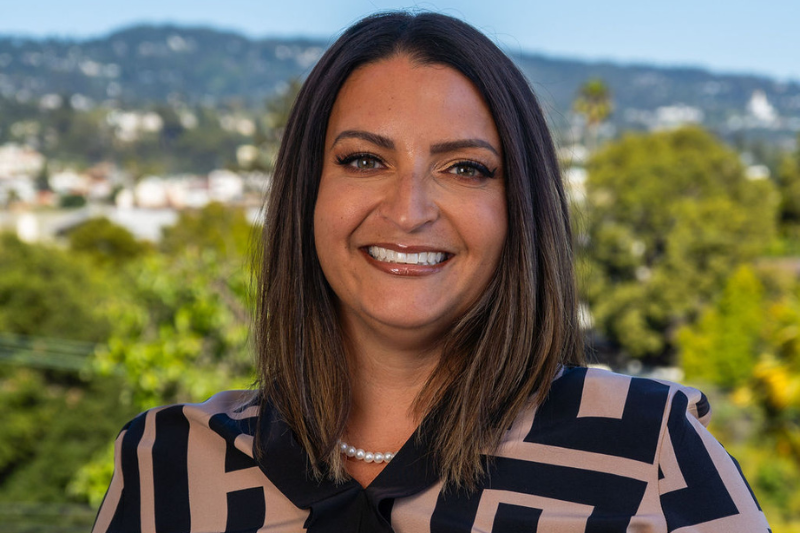
Norah Alyami is a California family law attorney with more than a decade of experience across nonprofit domestic-violence advocacy and private practice. She’s also the founder of DIY Family Law, a behind-the-scenes legal coaching practice designed for people who need real legal guidance—but not (or not yet) a traditional retainer-based attorney. Her work centers on education, empowerment, and meeting families exactly where they are, especially in moments of crisis.
What was the moment in 2021—during your pandemic pivot—when you knew a traditional firm model wasn’t the life or impact you wanted anymore?
In 2021, everything collided at once. Like so many people, I was already reassessing work during the pandemic—but at the same time, my own childhood sexual-assault case resurfaced. After more than twenty years, I was asked to come back and testify. That experience forced me to take a hard look at my capacity.
I realized that if I was going to continue supporting people through domestic violence, sexual abuse, and family trauma, I couldn’t do it in a way that ignored my own healing. The traditional firm model expects you to be “on” all the time, fully immersed in other people’s crises from start to finish. I needed boundaries. I needed balance. And I needed a way to serve people that honored both my mental health and the very real needs of families who were falling through the cracks.
That realization was non-negotiable for me—and it’s what ultimately led me to redesign my practice entirely.
“Yes, money matters. But so do time, emotional support, transportation, childcare, language access, and community.”
You’ve practiced for more than a decade across nonprofit domestic-violence work and for-profit firms. What did those two worlds teach you about what families actually need in crisis?
The biggest lesson was about disparity—and not just financial disparity. Yes, money matters. But so do time, emotional support, transportation, childcare, language access, and community.
In nonprofit work, I saw families with almost no safety net at all. In private practice, I saw people with resources who still felt completely overwhelmed. Across both worlds, the common thread was that the system assumes people have a “village” to lean on—and so many simply don’t.
What that taught me is that families need clarity, support, and realistic guidance far more than they need legal posturing. They need someone who understands the system and the human experience of moving through it.
Your motto is “educate and empower.” What does that look like in real life when someone is scared, overwhelmed, and doesn’t even know what questions to ask?
Education is my number-one pillar. Family court is full of legal language that intimidates people into silence, even though the court is still required to hear them.
My job is to translate—to explain what the law says, what it’s trying to do, and how someone can communicate their needs clearly without sounding like a lawyer. You don’t need legal jargon to be understood. You need structure, clarity, and confidence.
When people understand why something matters—best interests of the children, safety, stability—they stop feeling powerless. That’s when empowerment actually happens.
Not every family law attorney chooses a DIY, behind-the-scenes model. Why is this the most ethical and sustainable way for you to serve more people?
Because it fills a massive access-to-justice gap.
My model allows me to step in at any stage of a case—early questions, an upcoming hearing, a motion that needs drafting, or preparation for mediation. I’m not collecting a lump-sum retainer, and I’m not billing people to read five years of court filings. I come in surgically, focused on the issue that matters right now.
That means someone who can’t afford $10,000 upfront can still get high-quality legal guidance. And it means I can serve more people without burning out or compromising my values.
For moms reading this: what’s the difference between “Norah can coach and prep you” versus “you really need full representation”? How do you help people make that call?
It usually comes down to two questions: What resources do you have? And how much mental bandwidth do you have right now?
If someone wants to be completely shielded from court—appearances, filings, negotiations—then a full-scope litigation attorney is the right fit. That typically requires a retainer and ongoing billing.
My work is different. I support self-represented litigants. I don’t typically appear in court. I help people prepare, understand the law, draft and review documents, and walk into court knowing exactly what matters and what doesn’t.
If someone needs litigation, I’ll say that clearly—and refer them out. Trust is built by being honest about what I do and what I don’t do.
What kinds of situations make your DIY model a true lifesaver—especially for families dealing with domestic violence or high-conflict separation?
Cases involving safety—physical or emotional—are where my work matters most.
For survivors of domestic violence or coercive control, even sitting down to write what happened can be retraumatizing. My role is to listen, ask the right questions, and extract what’s legally relevant without forcing someone to relive every detail alone at their kitchen table.
I help turn lived experience into court-ready facts—so the judge sees what matters, without unnecessary emotional exposure. That first step alone can be the difference between staying stuck and moving forward.
When someone books an initial consult with you, what usually happens next?
Everyone gets homework. Always.
Sometimes that homework is logistical—thinking through a realistic custody schedule. Sometimes it’s evidence-based—collecting screenshots, saving voicemails, organizing documents. And sometimes it’s simply learning which form matters and where to file it.
From there, clients decide how much support they want. Some ask me to review documents before filing. Some book a second session. And some never need to see me again.
Honestly? If one hour gives someone enough clarity to move forward confidently, that’s a win.
Can one consult really be enough for some people?
Absolutely. My goal in that first hour is to give as much usable information as possible—roadmaps, context, and next steps.
I love hearing back from people who say, “I did it. I got my orders.” That’s the whole point.
How do you prepare someone to represent themselves in court—especially when they’re facing someone intimidating or controlling—without overpromising what the system will do?
First, I’m honest. This is the legal system, not the justice system. I can’t promise outcomes—and I won’t pretend otherwise.
What I can promise is preparation. We practice. Literally. I’ll have clients rehearse in the mirror or out loud with me: how to say what happened clearly, how to slow down, how to stay grounded. We take the emotion out of the delivery—not because the emotion isn’t valid, but because court isn’t the place to process it.
Whether someone is facing an abusive ex, a high-conflict co-parent, or just a deeply intimidating legal situation, preparation restores a sense of control. Once someone knows what to say—and just as importantly, what not to say—the experience becomes far less overwhelming.
And that’s usually when the bigger shift starts to happen.
What do people think matters in family court—and what actually does?
People often walk into court thinking the judge will care about things like:
“He cheated.”
“She’s a bad person.”
“Everyone knows he’s controlling.”
Every emotional detail of how the relationship fell apart.
Getting validation for how painful this has been.
And I get it—those things matter in real life. They’re deeply human.
But here’s what actually matters in court:
Specific facts: who did what, when, where, and who witnessed it.
Patterns of behavior, especially those tied to safety or stability.
Evidence—texts, emails, screenshots, reports.
Child-focused impact: routines, safety, consistency, best interests.
Legally recognized categories of abuse, including conduct that qualifies even without physical violence.
A huge part of my job is helping people stop pouring their energy into what the court legally can’t consider—and redirect it toward what gives them credibility and protection. Once that clicks, court feels less terrifying and far more structured.

What’s a moment from your work that really lights you up—when you see that shift click into place?
It’s when someone realizes they’re not powerless.
One of the biggest fears I hear—especially from moms—is that they’ll lose custody because they don’t have enough money or don’t have “perfect” housing. That fear alone keeps people frozen. But there’s clear case law stating a court cannot impair custody simply because a parent lacks financial resources.
When people learn that, you can almost feel their nervous system settle.
And then there are the moments I love most: when a client takes what we’ve worked on and uses it in court. I’ve had clients reference the right California Supreme Court move-away cases or calmly walk through the exact factors a judge is required to consider—and the courtroom just goes quiet. That how do you know that? moment.
That’s the bridge. Watching someone who felt like the underdog show up with clarity, language, and confidence—and realize they have real power in decisions about their own family.
That’s why I do this work.
You have a zero-tolerance stance on abuse of any kind. What do you wish more people understood about how abuse actually shows up?
In California, abuse does not require physical violence. Coercive control, financial monitoring, stalking, harassment, reproductive coercion—these all count.
One of the biggest misconceptions I hear is, “They didn’t hit me, so it’s not abuse.” That’s simply not true. California law recognizes a wide range of behaviors that disturb someone’s peace and safety.
Understanding that breadth is often the first moment of validation for someone who’s been minimizing their experience.
You also teach and speak publicly. What are your favorite topics to cover?
I love teaching people how family court actually works—how to open a case, prepare for mediation, draft a restraining order, or understand custody standards.
Group education lets me reach more people at once, and it reinforces the idea that knowledge itself is power.
Who thrives most with the DIY Family Law model?
Clients who do best are collaborative, motivated, and open to coaching. They’re willing to participate, stay organized, check email, and show up for themselves.
This model isn’t about outsourcing your agency—it’s about reclaiming it with guidance.
If a mom is reading this and thinking, “I’m not okay—and I don’t know where to start,” what’s the first thing she should do this week?
The first thing I want to say is that “not okay” can mean different things—and the next step depends on what that means for you.
If “not okay” means your physical safety feels threatened, or you’re worried about immediate harm to yourself or your children, that comes first. Pause everything else and focus on safety—reach out to a trusted person, a local resource, or emergency support if needed. Legal strategy can come next, but safety is always the priority.
If “not okay” means you’re mentally or emotionally at a breaking point—overwhelmed, exhausted, or questioning whether this relationship is sustainable—then the next step is clarity.
A strong place to begin is by arming yourself with information. I often suggest looking at the Power & Control Wheel, which can help you identify patterns and understand whether what you’re experiencing is recognized by the legal system. For many people, that alone brings a sense of validation and grounding.
From there, start a simple timeline of key moments in your relationship and begin saving relevant documentation—texts, emails, screenshots, social posts. This isn’t about escalating or filing anything yet; it’s about understanding your situation and protecting your options.
It’s also very common for people to book a consultation while they’re still undecided. Many aren’t ready to leave or take legal action—they just want to understand how things could play out, what their rights are, and what support might look like if they ever need it.
You don’t have to label your situation perfectly to take a first step. You just need to start in the right lane—with safety, clarity, and support.
Want to learn more or take the next step?
Book a consultation with Norah Alyami to talk through your situation, ask questions, and get clarity on your options—whether you’re deciding, preparing, or already mid-process
Explore DIY Family Law services to see how limited-scope legal support works and whether this model is the right fit for you
Review the Power & Control Wheel to better understand patterns of behavior and how they’re recognized by the legal system
Connect with Norah Alyami on LinkedIn, Facebook or Instagram.
You can also find her on The M List, The Mamahood’s searchable database of mom-recommended resources, or connect and collaborate with Norah Alyami inside The Club membership for women Founders.