Making Space for Calm: How Kara of Curated Surroundings Helps Families Breathe Again
Interview by Heather Anderson

When you walk into a home Kara has organized, you don’t just see clear counters and labeled bins — you feel your nervous system relax. As the founder of Curated Surroundings, she helps busy families reclaim their homes from clutter, chaos, and the mental load that comes with both. Her gentle, nonjudgmental approach comes from her own childhood, and it’s a big reason moms trust her with the “real” version of their homes.
This is organizing for real life — thoughtful, supportive, and deeply rooted in helping families function with more ease.
How did organizing become a grounding force for you growing up?
I had a pretty tumultuous childhood. We moved a lot, and there was a lot of instability. In all that chaos, organizing became the one area where I had control.
No matter what was happening, I could create order in my own little space. It made me feel calmer and safer — and that feeling has stayed with me my whole life.
What inspired you to turn something personal into a business helping families?
It really came together when I was working as a nanny. I saw firsthand how much kids — and the whole household — thrived when things were organized and easy to find. Their play improved, routines smoothed out, and parents were less stressed.
Around that time, The Home Edit show came out, and I realized professional organizing was truly a career path. I applied to a luxury organizing company, learned the industry side, and eventually realized I wanted to create something of my own.
That’s how Curated Surroundings started — as a way to bring that same sense of peace to more families.
You’re known for being incredibly gentle and nonjudgmental. Where does that compassion come from?
A lot of it comes from my childhood and the people I grew up around. We didn’t have much, so there was this deep attachment to belongings — a sense that if you gave something up, you might not be able to replace it. I understand why people hold onto things.
Because of that, I walk into every home with empathy. I don’t judge the clutter, the piles, or the overwhelm. I know how emotional it can be to let go of things, and I always aim to make the experience as gentle as possible.
What kinds of families or situations do you feel especially gifted at helping?
A few types really light me up:
Expecting parents & new mom households
I love setting up nurseries and helping families prepare for baby. After the baby comes, I help adjust the systems so they work with real life and the constant flow of tiny essentials.Playrooms & kid spaces
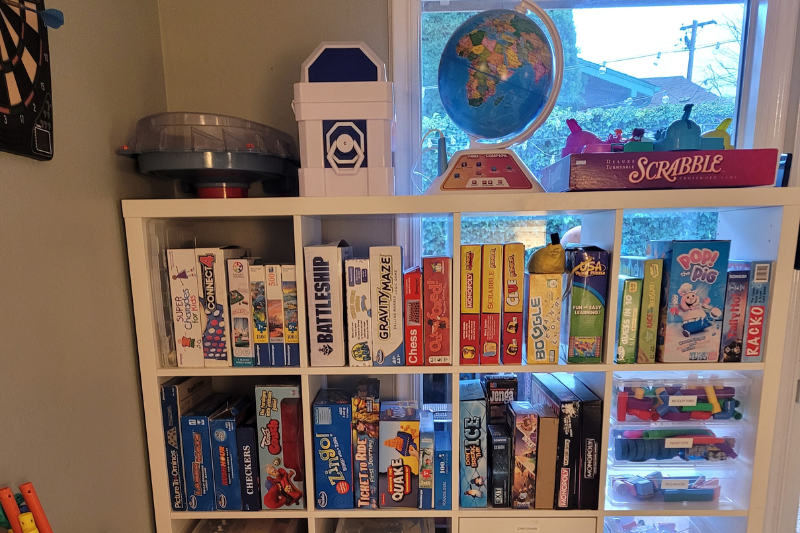
Playrooms are one of my favorite projects. When toys are organized in ways kids actually understand, they play more independently — which gives caregivers a break.Garages turned into usable kid spaces
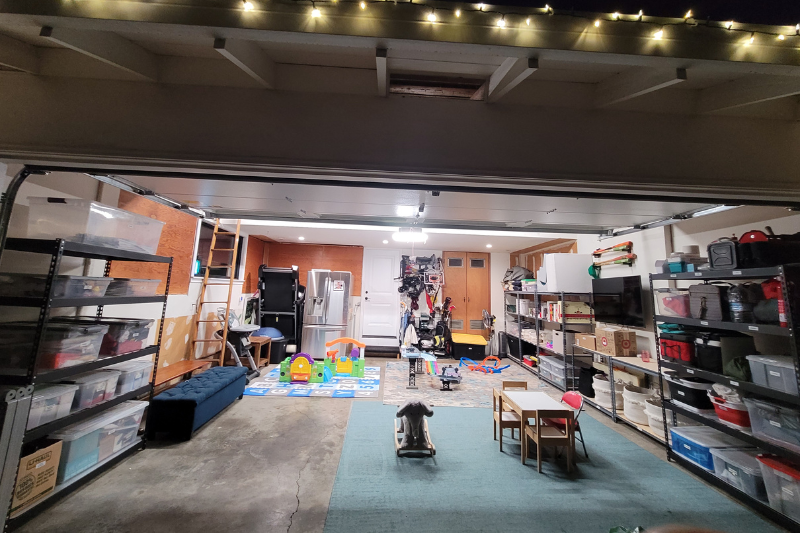
With small homes and no basements, garages often become the catch-all. I love transforming them into mini gyms or play areas while organizing the rest of the household storage around the perimeter.Pantries
Pantries are one of my absolute favorite spaces to organize! Mealtime is often one of the few moments in a busy week when the whole family can slow down and connect. When your pantry is set up in a way that works for everyone, you spend less time hunting for ingredients and more time actually enjoying that time together. Plus, an organized pantry is one of the easiest ways to save money — when you can clearly see what you have, you’re far less likely to overbuy or let food expire.
ADHD & neurodivergent households
Around 75% of my clients — or their kids — have ADHD. Creative, fast-moving brains tend to accumulate crafts, books, art supplies, and unfinished projects. I love creating systems that work with how their brains work, not against them.
Those families tend to benefit the most from systems that make daily life easier and calmer.
“In all that chaos, organizing became the one area where I had control.”
For moms who’ve never hired an organizer, what does a full day with you look like?
Before I ever arrive, we talk about your biggest pain points and what you want your space to feel like. Depending on your location, I’ll either do:
An in-person walkthrough
A virtual walkthrough
Or review photos/video of the space
On the organizing day itself, here’s the flow:
Walkthrough & goal-setting
We talk about what’s working, what isn’t, and what success looks like.Decluttering together
We go through items one by one. You decide what to keep, donate, toss, or sell. I’m there to guide, support, and help make decisions easier.Space planning
Once we pare down, I plan where everything should live based on your routines and how your family actually uses the space.Products & containment
If we’re using organizing products, we talk in advance about the budget. For multi-day projects, Day 1 is decluttering, and Day 2 is when I bring perfectly measured products. If it is a single day project, I usually shop in advance for the product.Setup & labeling
Everything gets placed intentionally and labeled so the whole family can follow the system.Final walkthrough
I show you exactly where everything lives, and I’m always available later if you forget where something ended up — I usually remember!
How do bigger, multi-day projects usually work?
Multi-day projects are typically garages or whole-home system setups.
For a garage:
Day 1 is almost always full decluttering. We pull everything out, categorize it, and make decisions. If you can’t be there, we often use photos or FaceTime.
I can help with selling items, listing on Buy Nothing, donation sorting, or taking photos and measurements so you can list items later.
Day 2 is all about system-building: shelving, zoning, bins, products, and labeling.
For whole-home projects, we move room by room over weeks or months until the entire home has cohesive, functional systems.
Do clients usually bring you in just once, or do you stay involved?
Both happen, but ongoing support is more common than people expect.
Some families hire me for one project and then continue until the entire home is organized. Others bring me back every quarter or twice a year for refreshes. Once systems are in place, refreshes are quick — just putting things back in their homes and adjusting for new seasons of life.
I also have families I visit annually for specific resets, like a December garage overhaul.
When you walk into a busy mom household, what “symptoms” do you see most often?
The biggest one:
Doom piles.
A doom pile is what happens when you gather everything in the way — because guests are coming, or you’re overwhelmed — and stash it somewhere to “deal with later.”
Later never comes.
When we sort them, I always hear, “I’ve been looking for this!” Doom piles are a sign that the family is busy and has outgrown the current systems — not that anything is wrong.
The next big symptom is entryway chaos:
Shoes
Backpacks
Jackets
School papers
Mail
Packages
The front door is a high-traffic zone that often needs a simple command center, with each child having their own hooks or bins, plus a clear place for incoming papers and mail.
Moms feel enormous guilt about clutter. What do you tell someone embarrassed to show you the real state of things?
Please don’t be embarrassed.
Clutter doesn’t tell me anything about your worth as a mom. It simply tells me you’ve been busy being a parent instead of spending your evenings doing deep-cleaning and reorganizing — which is completely normal.
Kids generate an unbelievable amount of stuff. Very few homes with children are pristine. And honestly, seeing the “real” version of your home helps me do my best work.
You’re not alone, and you’re not doing anything wrong.
For the mom who’s DIY-ing it, what’s one small, doable win she could try this week?
Pick one drawer or one bin — nothing bigger — and start there.
Empty it completely.
Sort quickly: keep, donate, toss.
If your kids are old enough, involve them. Kids maintain systems better when they help create them.
Help them choose items to gift, donate, or sell — it teaches generosity and ownership.
For neurodivergent or emotionally attached kids, a “transition bin” in the garage works well. If they don’t miss the items after a few months, they’re ready to go.
Small wins build momentum, and momentum is everything.
Can you share a client moment that really reminded you why this work matters?
I hear versions of the same thing from almost every client:
“My head feels so much clearer.”
“I can finally focus.”
“This feels better than therapy.”
The transformation isn’t just the tidy room, it’s the mental space that opens up when your home finally supports your life instead of overwhelming you.
That’s the part that keeps me doing this work.
For moms feeling overwhelmed by their home or their schedule, what’s the one message you want them to walk away with?
You are not the only one.
Almost every mom I work with feels behind, overwhelmed, or ashamed of the state of their home. It’s normal. You don’t have to tackle it alone, and asking for help — from a professional, a friend, or a family member — is completely okay.
Your home can change. Your stress can ease. You’re not failing, you’re simply human.

Ready to feel that sense of calm in your own home? Here’s how to get started.
Book a short discovery call to talk through your space and goals.
Reach out about a garage, nursery, pantry, or playroom project.
Follow Curated Surroundings for easy organizing ideas and inspiration.
Connect with Curated Surroundings on Facebook or Instagram.
You can also find her on The M List, The Mamahood’s searchable database of mom-recommended resources, or connect and collaborate with Kara inside The Club membership for women Founders.