The Neuroscience of Joy: How Linda Shively Helps Women Rewrite Their Emotional Wiring After Hardship
Interview by Heather Anderson
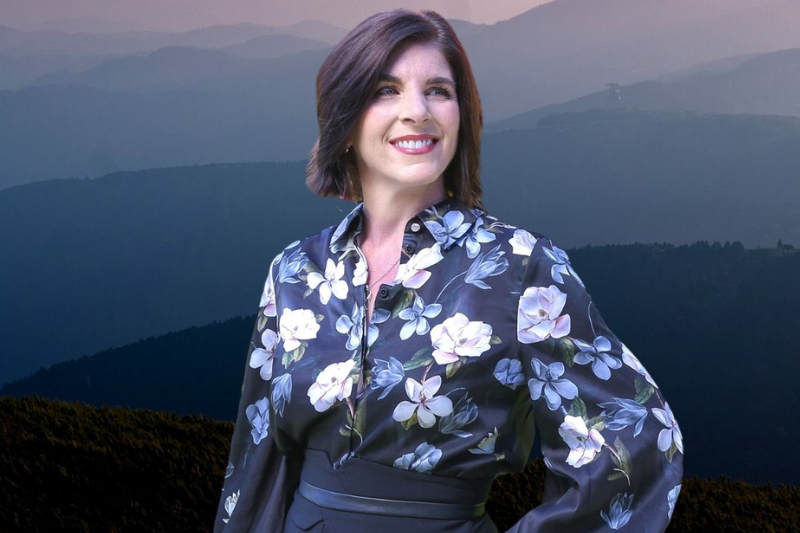
When you meet Linda Shively, you’d never guess that her story began with heartbreak. Years ago, she made the impossible choice to leave an abusive marriage while caring for her three-year-old daughter, Jessica, who had spinal muscular atrophy (SMA). Jessica’s condition affected her ability to walk, crawl, swallow, and breathe—but never her spirit. That joy became the heart of everything Linda would go on to teach.
So when Linda recently met a family whose newborn was screened for SMA and treated right away—with no symptoms at all—she felt a rush of awe and bittersweet gratitude. It was the living proof that all the advocacy work she began in Jessica’s honor was changing lives. And it’s what fuels her mission today: helping women navigate life’s biggest changes with resilience, science-backed mindset tools, and a deep commitment to joy.
You recently met a family whose newborn was screened for SMA and treated right away. How did that moment land for you personally, and how does it shape the way you talk about resilience and joy today?
Meeting that family was exhilarating and emotional. When Jessica was first diagnosed, I knew I might not be able to save her—but I was determined that other families wouldn’t have to experience what we did. So I fundraised, advocated, and kept pushing for research and treatment.
Seeing that little girl thriving today feels like everything came full circle. It’s a reminder that my sadness and my joy can coexist—that the pain of losing my daughter can live right next to the gratitude of seeing what’s possible for others. That balance is what resilience really looks like.
You’re not “just” a coach—you’re a neuroscience and mindset expert with 30+ years of brain science behind you. From that experience, what can you say about how women can truly rewire for joy after stress, grief, or burnout?
It’s absolutely possible to rewire your brain for joy, no matter what you’ve been through. We can’t change the events of our past, but we can change how our brain interprets and reacts to them.
I use a blend of modalities—Neuro-Linguistic Programming (NLP), intuitive coaching, hypnotherapy, the Enneagram, and timeline therapy—to help women shift how they think, perceive, and respond.
The process is about reprogramming patterns that keep you stuck in survival mode so you can respond from empowerment instead of pain. Once you change your mind’s wiring, your choices, relationships, and outcomes start to change too.
“Mindset alone isn’t enough—you need momentum. Once you shift how you think about a problem, it often stops being a problem at all. ”
A lot of moms tell us they feel numb—not sad, just flat. What’s the first sign you look for that someone’s “joy wiring” needs attention, and what’s the simplest first shift they can make this week?
The biggest clue is that question: “Is this all there is?” From the outside, life might look good, but inside there’s a disconnect. That’s a sign your joy wiring needs attention.
The simplest fix is to smile—literally. Even if it’s fake at first, smiling activates the same neural pathways as genuine happiness. If you can’t smile, hold a pen horizontally in your mouth—it forces your facial muscles into a smile and tricks your brain into feeling better.
From there, start focusing on gratitude. Notice something small you appreciate: your morning coffee, a flower you walked past, the laughter of your kids. That awareness grows, and gratitude becomes the bridge back to joy.
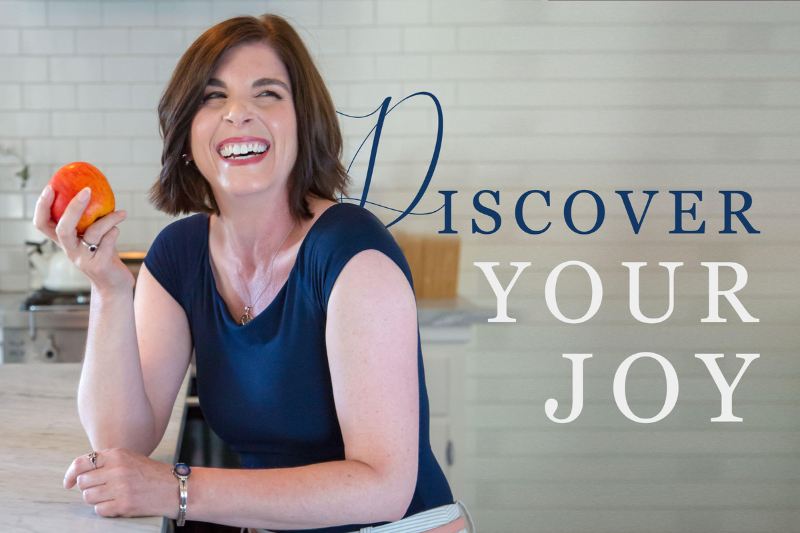
You often talk about “taming your dragons.” What are the most common dragons you see for high-achieving women—and how do you start taming them without burning your life down?
I call them my Joy-Stealing Dragons.
There’s Second-Guessing Sally, who makes you doubt every decision.
No-Good Nancy, who tells you you’re never enough.
Perfect Paula, who stops you from finishing because it’s never “just right.”
Judging Jenny, who loves social comparison and assumes everyone’s watching.
And Overwhelmed Ophelia, who packs your schedule so tight you forget to breathe.
The key isn’t to slay them—it’s to tame them. Each dragon is trying to help you in some way, just not very effectively.
There are three ways to start:
Live a better story. Rewrite the meaning you give your past. One client had spent years defining herself only as a caregiver; once she re-authored her story, she rediscovered her identity and began playing music again.
Tell time what to do. Time doesn’t heal anything—it’s what you do with it that matters. Direct your time intentionally, or life will decide for you.
Choose your voices. Pay attention to who and what you let influence you—both externally and in your own head. That critical inner voice usually isn’t even yours. You’d never talk to your best friend the way your mind talks to you.
In your True Joy Life program, you blend deep emotional work with action. How do you make sure that change actually sticks?
Mindset alone isn’t enough—you need momentum. Once you shift how you think about a problem, it often stops being a problem at all. From there, accountability and action take over.
In the program, women start writing books, launching businesses, cleaning out emotional and literal clutter, even improving their health. It’s about pairing internal transformation with external movement. Joy grows fastest when you’re in motion.
For readers who love a concrete tool, can you walk us through a quick “Joy Reset” someone could try in the school pickup line or between Zooms?
Laugh for no reason. Truly! Your brain doesn’t know the difference between real laughter and fake laughter. Start chuckling, even if it feels silly, and you’ll feel lighter within seconds.
Dr. Madan Kataria, the cardiologist who founded Laughter Yoga, discovered that his patients who laughed regularly had better health outcomes. It’s science-backed joy. And yes, people may look at you funny—but they’ll probably start laughing too.
You’ve spoken everywhere from Nasdaq to the Harvard Club and appeared on ABC, CBS, FOX, and NBC. What story or exercise consistently gets the biggest “aha” from audiences—and why do you think it lands so powerfully?
In 2005, I had to make an unthinkable decision: leave an abusive marriage while caring for my three-year-old daughter, Jessica. Two weeks later, she passed away in the ICU.
I could have stayed frozen in that pain forever. But I remembered what a friend told me when Jessica was diagnosed: “You can’t change what happens to you—you can only change how you deal with it.”
That became the foundation of everything I teach. When I share that story from the stage, people realize that joy isn’t a mood—it’s a decision. You can honor your grief and still choose life, love, and laughter. That moment always opens hearts in the room.
That story is incredibly powerful, and I know there’s a much deeper version behind it. Would you share what that experience was really like—and how it became the turning point for the work you do today?
In 2005, I had to make one of the hardest choices of my life: figuring out how to leave an abusive marriage while caring for Jessica, my bright-eyed three-year-old with spinal muscular atrophy. She couldn’t walk or crawl, but she could zoom around in her power chair and light up every room she entered.
One Tuesday afternoon, I brought Jessica home from preschool, looked at her nurse, and said, “You pack her medical equipment. I’ll pack her clothes and toys. As soon as she wakes up, we’re leaving.”
Two weeks later, I sat at the foot of her hospital bed in the pediatric ICU. It was two days after Christmas. The head of pediatric intensive care came in on his day off, sat beside me, and said quietly, “She’s not going to make it.”
The alarms started blaring—“Code Blue, Code Blue.” The medical team rushed in, ready to revive her. But the doctor just waved his hand over her bed, and everyone stopped. We stood there in silence as the machines went flat.
I picked her up one last time, and for a brief moment, I could still feel her life. Then she was gone.
I could have stayed in that moment forever. But I remembered what a friend had told me when Jessica was first diagnosed: “You can’t change what happens to you. You can only change how you deal with it.”
So I chose to get help. I went to therapy, found coaching, rebuilt my life, and decided that Jessica’s joy wouldn’t die with her. It would live on in my work—and help other people find their way back to joy after loss.
Many readers are in a “what’s next?” season—kids older, career shifting, energy low. How do you help someone find their North Star again when everything feels stale?
When life feels off-course, it’s usually because you’re living by someone else’s map. I guide women back to their North Star by helping them reconnect with what truly matters and envision their next chapter.
I’ve created a recorded version of my North Star Map-Making Meditation that walks you through this process. Normally I reserve it for clients, but anyone reading this can access it with the code MAMAHOOD at lindashively.com to download it for free.
If a woman is on the fence—she wants help but hesitates—what do you want her to know about working with you? What kind of client thrives with your approach?
The women who thrive with me are growth-minded, high-achieving leaders who know that what got them here won’t get them there. They’ve achieved a lot, but they’re ready for deeper alignment.
They want to create lasting change in their relationships, health, and purpose—not just quick fixes. Together, we work on mastering new mindsets and embodying a new identity, so they can climb the next mountain with joy instead of exhaustion.
For anyone feeling a spark right now—where’s the best place to start, and what’s one thing you hope she remembers after reading this?
If you’re ready to take action, book a Clarity Call—it’s the best first step.
If you’d rather start small, grab a free copy of my book Getting to Joy at gettingtojoy.com/gift.
And please remember this: joy and sadness can coexist. You don’t have to choose one or the other. Healing isn’t about forgetting—it’s about remembering with love.
Ready to reconnect with joy?
Invite Linda to speak at your next conference or corporate event.
Explore her North Star Map-Making Meditation with code MAMAHOOD at lindashively.com.
Connect with Linda Shively on LinkedIn or Facebook.
You can also find her on The M List, The Mamahood’s searchable database of mom-recommended resources, or connect and collaborate with Linda inside The Club membership for women Founders.